Music
XiuXiu
Voice
Review
On Nobody’s Own: Xiu Xiu (2026)
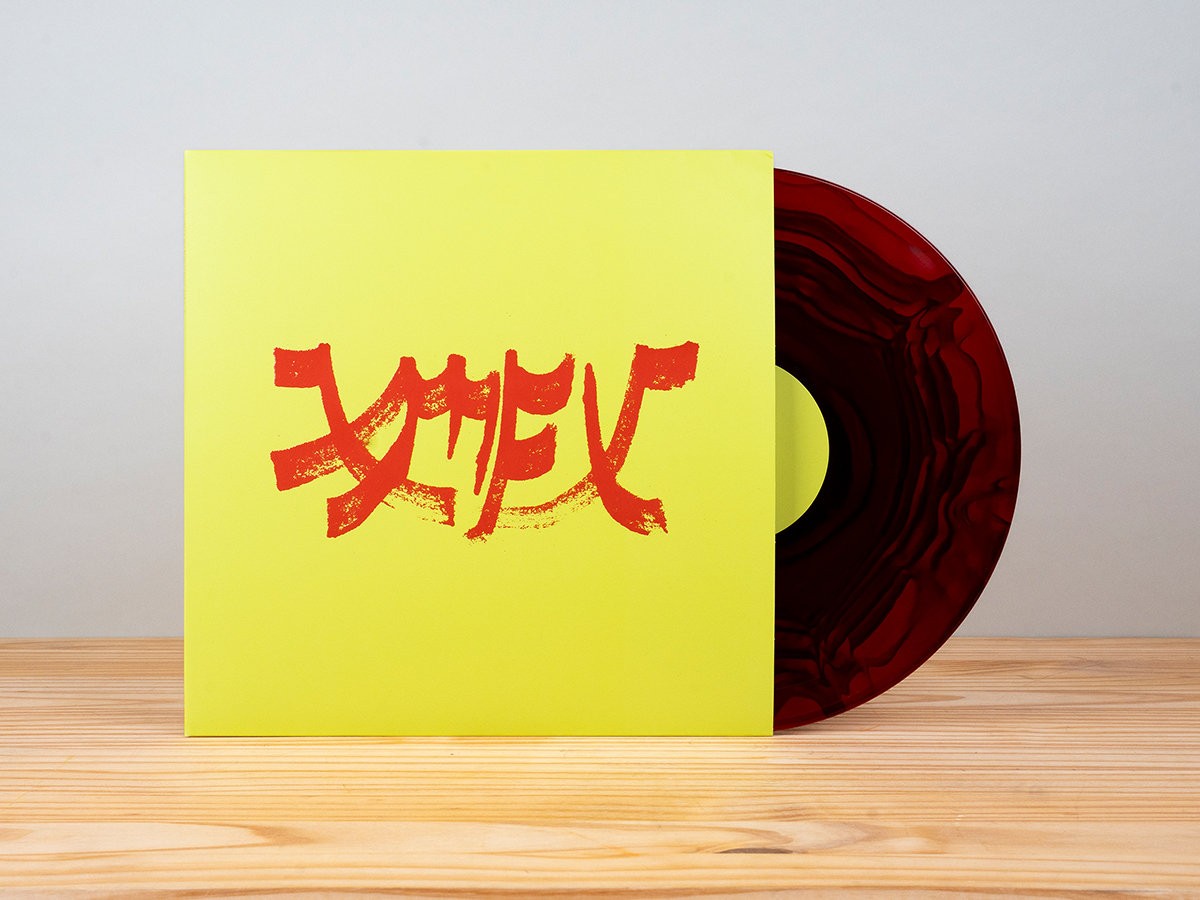
Only a handful of my friends liked the recent album of covers by Xiu Xiu (Xiu Mutha Fuckin’ Xiu: Vol. 1); the most common reaction being that the voice wasn’t that good. This is not an uncommon reaction to Jamie Stewart’s vocals, which can be described as intentionally abrasive, emotionally exposed, and marked by a “raw” quality. I can clearly remember that it took me quite some time and effort to acclimate to it, and this raises an interesting twofold question: what the perceived defect of the voice is, and why it was worth the effort in the end.
Perhaps it was Brian Eno who first proclaimed, in the realm of popular music, that the voice is merely an instrument. In academic music, the idea can be traced back at least to the early twentieth century (Stravinsky, Debussy, and others), if not as far back as Wagner.The lesson I’ve learned from the music of Xiu Xiu is that we can go a step further and say that the voice is not even an instrument; it’s a sound effect. I’m not claiming that they do this deliberately or explicitly (they might), or that they were the first to do so. Laurie Anderson’s pieces, such as O Superman, clearly fall along the same lines. Still, in my own listening experience, this realization is most strongly and decisively tied to Xiu Xiu. I’ll try to explain what I mean by it.
In most pop music, the voice normally functions as the load-bearing structure of the song. The vocal line carries the melody, stays in the foreground, and ultimately determines how the song is identified and remembered. The rest of the musical lineup serves primarily to frame and support the voice. Challenging this status quo is one of the easiest ways to lay claim to experimentality. The voice is also central to attention: when Barthes reflects on the materiality of the voice in Le grain de la voix, his focus, both as a listener and as a scholar, is drawn to the voice itself. I tend to do the same: when I listen to vocal music, my ears lock onto the voice first and then follow it to explore the rest of the sonic landscape.
In The Gutenberg Galaxy, McLuhan retells an anecdote about a film shown to a tribe in Africa. A chicken appears briefly on screen, pecking at grain, and when the viewers were later asked what they had seen, they spoke only of the chicken, ignoring everything else in the film. The chicken drew their attention not because it was familiar, but because it was the most dynamic and visually engaging element on screen. When it comes to songs, the voice is our chicken; we follow it, and it is happy to guide us. There is an affinity between me as a listener and the voice that lives inside the music; in some sense, it is my voice – my inner imaginary vocal apparatus gestures along with it as though I am the one who’s singing.
Within the technological arrangement of playback, the voice functions as a material stand-in for the human; as the only human present, I almost inevitably frame myself as its referent. Violence against it is, therefore, violence against me. And violence is exactly what takes place on Xiu Xiu’s records; this one is no exception.
Stewart’s main move is to pull vocal grimaces; his antics are far more pronounced and far more irritating than, say, David Bowie’s. This is a voice that resists affection: I dislike it the way I dislike my own recorded voice. It is obnoxious; too close to or too far from my ears, never quite in the right place. It’s always full of effort: when it climbs, it sounds exhausted; when it falls, it flaps and thrashes like a dying bird. This quality is especially noticeable on OH NO, released during the COVID years, where the invited vocalists sound markedly sturdier and more solid than Stewart. This unusual mobility makes the voice sound as if it is trying to dodge danger, pushing through a hazardous space; in many senses, that is exactly what it is doing.
Rather than supporting it, the other instruments assault it: guitars slice through it like razors; drums pound it like mallets; distorted synths bite into it, tearing away parts of its spectrum. It crumbles piece by piece; the moments when the voice is foregrounded lay the damage bare. What remains is a human-like, voice-like effect buried in the song’s soundbox: a leftover of an amputation; at once a lack and an excess. These mysterious lines from Stand Up (Forget, 2017) begin to make sense, if “my face” is read as “my voice”:
A piano fell on my face...
A harmonica fell on my face...
A saxophone fell on my face...
The blend of brute physical force and overt unreality in these images points to the muted body-horror at work in Xiu Xiu’s production aesthetic. Here, the voice loses its capacity to anchor subjectivity. The voice is no longer an “instrument” as it has given up “instrumentality” to embrace its own burial under the layers of music that fall onto it. In the cover of Robyn’s Dancing on My Own the voice articulates its condition explicitly: “I'm in the corner, watching you kiss her // I'm right over here, why can't you see me?” In kissing, the mediation of language gives way to the immediacy of physical contact, and the clearly defined positions of communicators dissolve into unity.
The voice, as a conveyor of meaning, recedes into obscurity as something unnecessary. It keeps telling me that it “keeps dancing on its own,” but I don’t believe that it really has an “own” to dance on. Jamie Stewart’s vocal cords are liars; and yet, they are honest liars, quick to betray themselves and to gesture openly toward their own deceit. Air blown between two flapping folds was never meant to serve as a conduit of truth. About three minutes into the song, layered over the string synths, a sound emerges that resembles wind in a microphone. I find myself drawn to it in a way I have never been to my own voice. Or any other voice, for that matter.